 Join
Join
Learn how a VPN works, how it protects online privacy, and why governments restrict or regulate VPN usage due to security, law enforcement, and policy concerns.
A VPN (Virtual Private Network) is widely used around the world to protect online privacy, secure data, and access the internet safely. At the same time, many governments ban, restrict, or regulate VPN usage.
This often creates confusion:
If a VPN improves security and privacy, why do governments restrict it?
This article explains:
- How a VPN works (in simple terms)
- Why governments ban or restrict VPNs
— without focusing on any specific region or political situation.
What Is a VPN?
A Virtual Private Network (VPN) is a technology that:
- Encrypts your internet data
- Hides your real IP address
- Routes your traffic through a secure server
In short, a VPN creates a private and secure connection over a public internet.
How a VPN Works (Step-by-Step)
1. VPN Connection Starts
When you open a VPN app and click Connect, your device connects to a VPN server instead of directly connecting to the internet.
2. Data Is Encrypted
Before your data leaves your device:
- It is encrypted (scrambled into unreadable code)
- Third parties cannot understand it
Example:My data → 9X@#4!L$
3. Secure VPN Tunnel
The encrypted data travels through a secure tunnel between your device and the VPN server.
This tunnel protects data from:
- Hackers
- Internet Service Providers (ISPs)
- Wi-Fi owners
- Trackers
4. VPN Server Acts on Your Behalf
The VPN server:
- Decrypts your request
- Sends it to the website you want to visit
The website sees the VPN server’s IP address, not your real one.
5. Response Comes Back Securely
The website sends data back to the VPN server, which:
- Encrypts it again
- Sends it securely to your device
You see the website normally, but with privacy and protection.
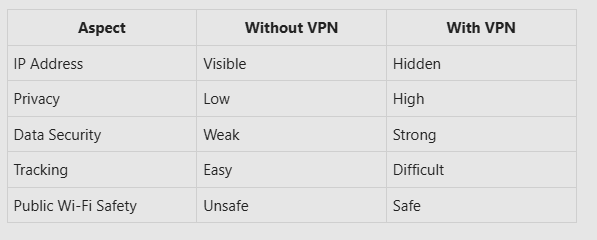
What Changes When You Use a VPN?
Why Governments Ban or Restrict VPNs
Governments usually do not ban VPNs randomly. Restrictions are imposed for multiple legal, security, and regulatory reasons.
1. National Security Concerns
VPNs encrypt data, making it difficult for authorities to:
- Monitor suspicious online activity
- Track illegal communications
- Investigate serious threats
From a government perspective, complete anonymity can be misused for unlawful purposes.
2. Law Enforcement & Investigations
Law enforcement agencies rely on:
- IP addresses
- Traffic logs
- Digital trails
VPNs hide or mask these details, which can:
- Delay investigations
- Make cybercrime tracing difficult
3. Prevention of Illegal Activities
VPNs can be misused for:
- Cybercrime
- Online fraud
- Dark web access
- Bypassing digital laws
Because tracing such activities becomes harder, governments may limit VPN usage.
4. Control Over Encrypted Communication
Governments regulate:
- Internet platforms
- Messaging services
- Encryption standards
VPNs provide private, unregulated encryption, which some governments see as a challenge to lawful oversight.
5. Bypassing Internet Regulations
VPNs allow users to:
- Access blocked websites
- Bypass content restrictions
- Avoid censorship systems
Governments may restrict VPNs to enforce national internet policies.
6. Economic & Regulatory Reasons
Some countries:
- Require VPN providers to register locally
- Demand data retention or logging
- Allow only government-approved VPNs
Unregistered VPNs may be blocked to maintain regulatory control.
Source
FAQs: How a VPN Works & Why Governments Restrict It
1. What does a VPN do?
A VPN (Virtual Private Network) encrypts your internet data and hides your real IP address. It routes your traffic through a secure server, protecting your privacy and improving security—especially on public Wi-Fi.
2. Is using a VPN legal?
VPN legality depends on the country. In many places, VPNs are legal. Some governments regulate or restrict them, and a few ban unapproved VPN services. Always check local laws before using one.
3. Why do governments restrict or ban VPNs?
Governments may restrict VPNs to address:
- National security concerns
- Law enforcement and investigations
- Cybercrime prevention
- Control over encrypted communications
- Enforcement of internet regulations
4. Can a VPN make me completely anonymous?
No. A VPN increases privacy but does not guarantee full anonymity. Websites can still track users through cookies, accounts, or device fingerprints. VPN providers may also see limited connection data.
5. Does a VPN hide my activity from my internet provider?
Yes, a VPN encrypts your traffic so your internet service provider (ISP) cannot see the websites you visit. However, the ISP can usually see that you are connected to a VPN.
6. Can governments track VPN users?
Tracking is more difficult with a VPN, but not impossible. Governments may use legal orders, cooperation with VPN providers, or other technical methods to investigate serious cases.
7. Why do some services block VPNs?
Streaming platforms, banks, and websites may block VPNs to:
- Prevent fraud
- Enforce regional rules
- Stop misuse or automated traffic
8. Are free VPNs safe?
Many free VPNs have limitations and risks, such as:
- Data logging
- Ads and tracking
- Slower speeds
- Selling user data
Paid, reputable VPNs usually offer better privacy and security.
9. Does a VPN slow down internet speed?
A VPN can slightly reduce speed due to encryption and server distance. High-quality VPNs minimize this impact by using fast servers and modern protocols.
10. Can a VPN protect me from hackers?
A VPN greatly improves security, especially on public Wi-Fi, by encrypting your data. However, it does not replace antivirus software or protect against malware by itself.
1 thought on “How a VPN Works and Why Governments Ban or Restrict It”
Comments are closed.